What an Open Spice Market Teaches You About Freshness
Walking past open sacks of dried rosebuds, chilies and ginger root changed how we buy and store spices. Lessons from market stalls on buying whole, smelling first, spotting imitation saffron and keeping flavor alive.

Danielle Okafor-Reyes, Founder & Editor-in-Chief
· 4 min read
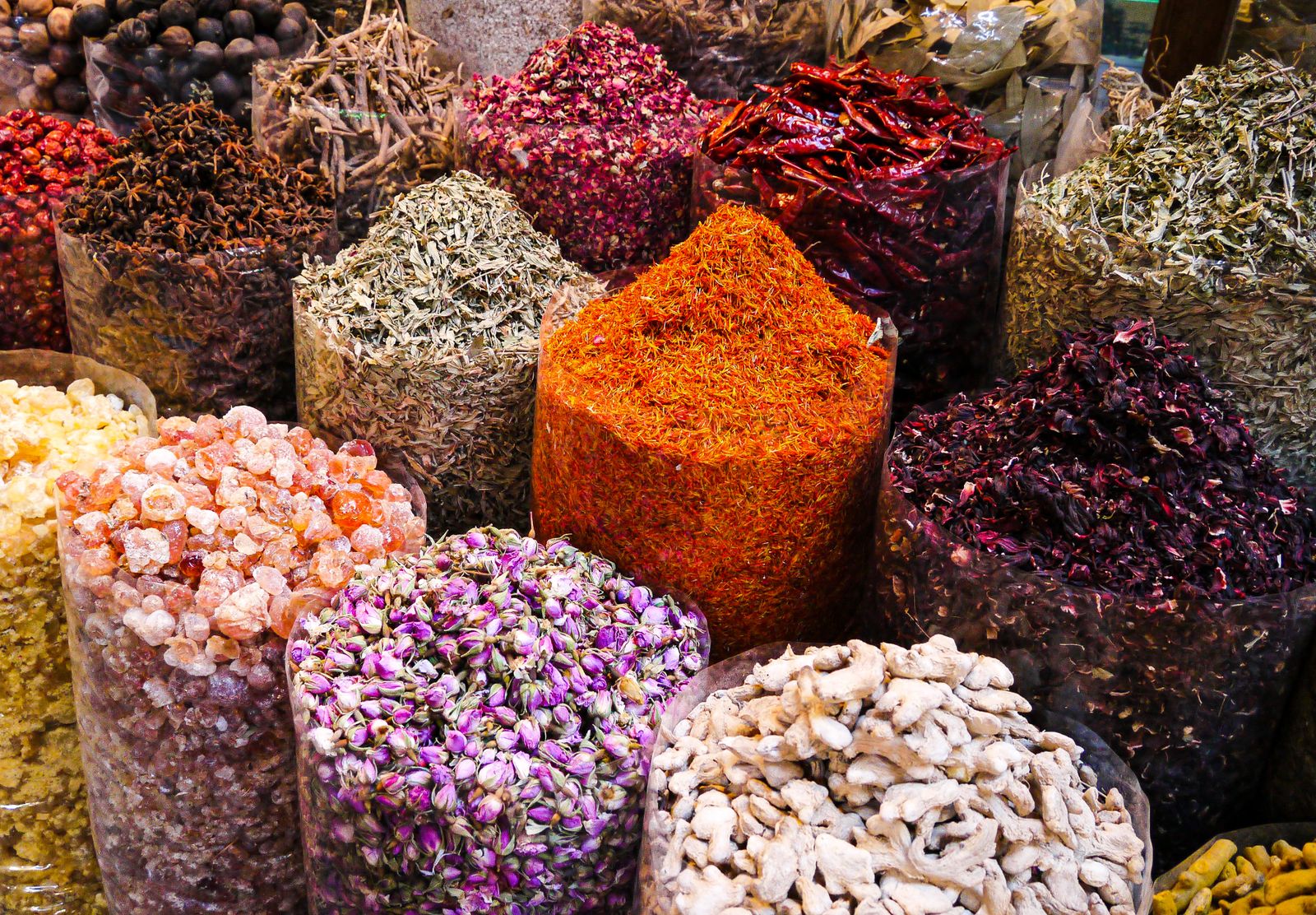
The first time most of us walked through a covered spice market, it was the smell that stopped us before anything we saw. Dried roses, chilies, ginger and warm cardamom hang in the air so thickly that you can identify stalls with your eyes closed. Compare that with opening a small jar at the supermarket, where you often have to put your nose right inside to smell anything at all. That gap is the most useful lesson a spice market teaches, and it has shaped how we source spices for our store.
Sold by weight, judged by nose
At a traditional market, spices are sold loose from open sacks and weighed to order. Vendors expect you to pick things up, crush a pinch between your fingers and smell. Freshness is visible and obvious. Whole chilies should still be glossy and flexible rather than brittle and faded. Dried rosebuds should hold their color and smell like perfume, not dust. Ginger root should be pale and dense.
The practical habit we brought home is simple: judge a spice by aroma before you judge it by label. If a ground spice smells faint when you open the jar, it will taste faint in the pot, no matter what the best-by date says.
Whole spices keep, ground spices fade
Much of a spice's flavor lives in volatile oils. Grinding exposes them to air and they begin to escape immediately. Whole seeds, pods and bark keep for a year or more, while most ground spices lose noticeable intensity within six months. In our test kitchen we buy the following whole and grind them in a small dedicated grinder or mortar as needed.
- Cumin and coriander seeds, which transform when toasted and ground fresh.
- Black peppercorns, cardamom pods and cloves.
- Fennel seeds and mustard seeds.
- Dried whole chilies, which we toast lightly, stem, and grind into our own flakes.
A few spices are genuinely hard to grind at home, such as turmeric, dried ginger and cinnamon bark from thicker quills. We buy those ground, in small amounts, from a source with high turnover.
Flowers and petals belong in the kitchen too
Markets like the one in the photo are also a reminder that dried flowers are ordinary ingredients in many cuisines. Rosebuds are ground into spice blends or steeped for syrups. Deep crimson hibiscus is brewed into a tart, cooling drink across West Africa, the Middle East and Latin America. Dried lime, chamomile and lavender show up in stews, teas and pastries. If you buy them, look for strong color and fragrance, and store them the same way you would any spice.
Spotting imitation saffron
The bright orange heaps of threads sold cheaply in many markets are usually safflower, sometimes called bastard saffron. Safflower is a pleasant ingredient in its own right and gives color, but it has almost none of saffron's honeyed, slightly metallic aroma. Real saffron is sold in small quantities, often by the gram, and it is never piled in open sacks.
- Real saffron threads are deep red, trumpet shaped at one end, and noticeably fragrant.
- Soaked in warm water, real saffron slowly releases golden yellow color while the threads stay red.
- Safflower petals are thinner, more orange, and color the water quickly without much smell.
A price that seems too good for saffron is the clearest sign that it is not saffron.
Bringing market habits home
You do not need to travel to shop like a market regular. Buy smaller amounts, more often, from shops that sell a lot of spice. Store jars away from the stove and out of direct light, since the heat and sun that make a market display beautiful are exactly what fades spices on a kitchen shelf. Label each jar with the month you bought it.
Most importantly, wake spices up before you use them. Toast whole seeds in a dry pan over medium heat just until fragrant, usually one to two minutes, or bloom ground spices in hot oil at the start of a dish. That brief heat releases the aroma that first stopped us in a crowded market aisle, and it is the closest thing to bringing that smell back into your own kitchen.