A Grazing Board for Six That Comes Together in Twenty Minutes
A generous board does not need a dozen cheeses. We build ours around one soft cheese, marinated olives, fruit, good oil and toasted bread, with a simple layout that looks abundant and is easy to refill.

Kenji Arakawa, Head of Photography
· 4 min read
We style a lot of food boards for the journal, and after enough shoots we noticed something. The boards that photograph best are rarely the most crowded. They have a clear anchor, a few colors that play off each other and room for the eye to rest. Those same boards are also the ones guests actually eat from, because nobody has to excavate for a cracker. This is the formula we now use both on set and when we are hosting at home.
Start with one anchor, not six
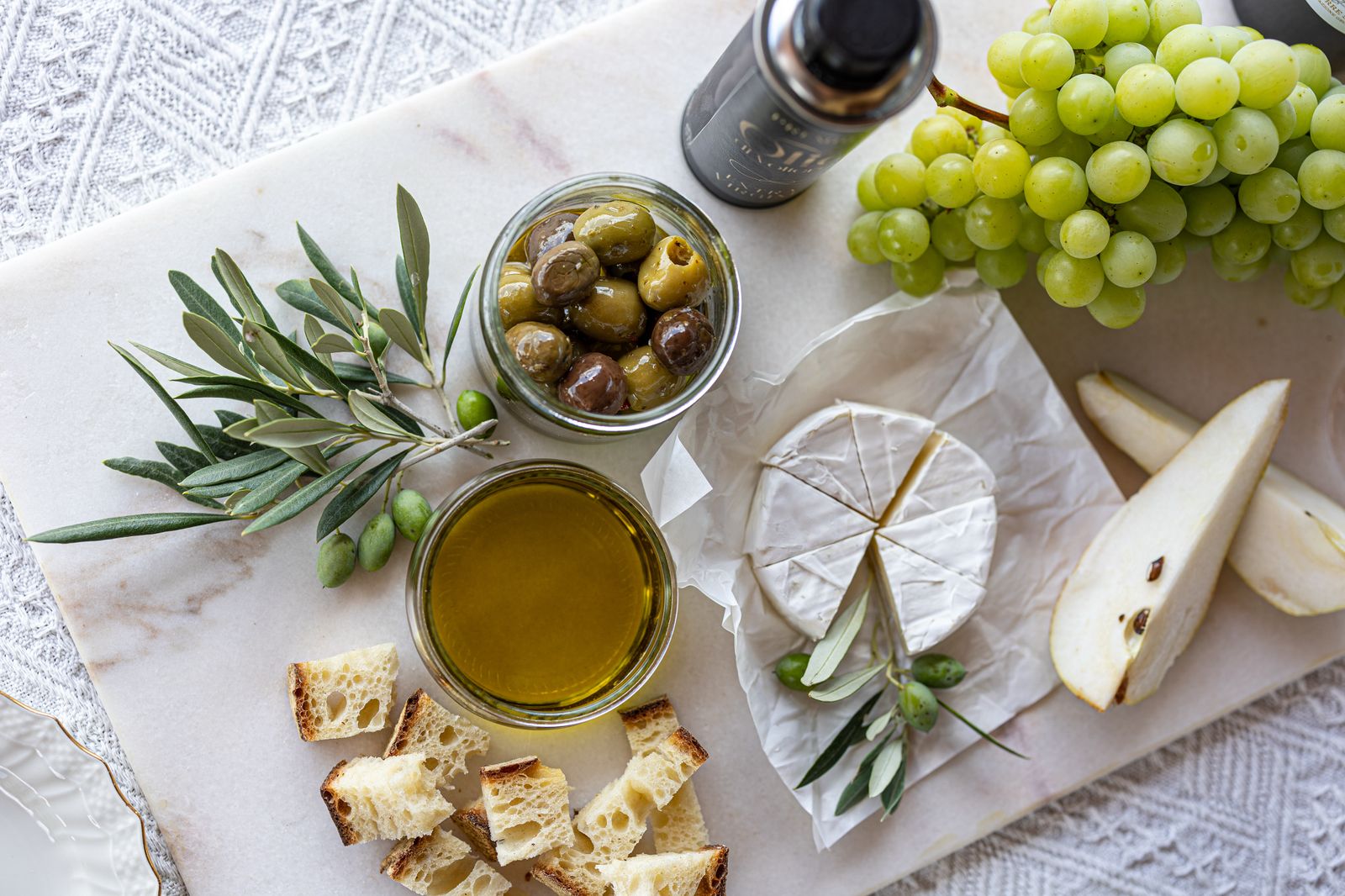
For six people as a pre-dinner snack, one good cheese of about 250 grams is plenty, with a second only if the board is the whole meal. A soft, bloomy rind cheese is the easiest crowd pleaser. Take it out of the refrigerator an hour before guests arrive so it softens. Cut a few wedges from one side, as in the photo, so people know it is fine to dig in, but leave most of the wheel whole so it does not dry out.
If you add a second cheese, choose a contrast in texture and milk: an aged hard sheep cheese or a crumbly aged cheddar next to the soft one works well. Three is the maximum we ever serve.
The rest of the board, in order of importance
- Something salty: a small jar of mixed olives, ideally warmed and marinated with citrus peel and herbs.
- Something fresh and sweet: green grapes left in small clusters, and ripe pear sliced at the last minute.
- A small bowl of your best olive oil with flaky salt for dipping.
- Bread, torn or cut into cubes and toasted briefly so it holds up to the oil.
- A green garnish, like a few olive branches or herb sprigs, which is decorative only and should be food safe.
Notice what is missing: no crackers in six shapes, no fanned salami rosettes, no tiny bowls of five different jams. Fewer components means less shopping, less prep and fewer half-eaten leftovers at the end of the night.
A twenty-minute timeline
Here is how we pace it so the board is ready as the doorbell rings.
- Minute 0: take the cheese out of the refrigerator if you have not already. Heat the oven to 400 F.
- Minute 2: cut bread into one-inch cubes, toss with a little oil and salt, and toast on a sheet pan for 8 to 10 minutes.
- Minute 5: warm the olives gently in a small pan with a strip of orange peel, a sprig of rosemary and a spoonful of oil.
- Minute 12: wash the grapes, dry them well, and snip them into small clusters with scissors.
- Minute 15: place the cheese first, then bowls of olives and oil, then grapes, then bread.
- Minute 19: slice the pear and add it last so it does not brown, then tuck in the greenery.
Place the largest item first and the smallest last. Anchors, then bowls, then fruit, then the fillers.
Layout tricks from the photo studio
A light surface like marble or a pale wooden board makes colors pop and reads as clean and fresh. Put bowls slightly off center and at different distances from the edges, which looks more natural than a neat row. Group items in odd numbers, such as three pear slices rather than four, and let the cheese paper or parchment show a little. It signals that the board is meant to be eaten, not admired.
Leave small open gaps rather than filling every corner. Gaps make refilling easy, and they let each item stand out. When the board starts to look picked over, simply top up the grapes and bread, which instantly restores it.
Keeping it fresh through the evening
Soft cheese is best within about two hours at room temperature, so for a longer party keep half the wheel back in the refrigerator and swap it in later. Slice pears in small batches, or toss them with a few drops of lemon juice. Serve bread in a bowl beside the board if you are expecting many guests, so crumbs do not cover everything else.
Afterwards, leftovers become lunch: warm olives and oil over pasta, pear and cheese in a toasted sandwich, and extra bread crushed into crumbs for tomorrow's gratin. A good board should feel generous for the evening and create almost no waste the next day.