Refrigerator Pickles in an Afternoon: The Brine Ratios We Actually Use
No canning pot, no special equipment. Our basic refrigerator brine, which vegetables stay crisp, how to balance aromatics like bay leaf and mustard seed, and how long quick pickles really keep in the fridge.

Naomi Castell, Membership & Community Lead
· 4 min read
Every July our community potluck turns into an unofficial pickle swap. Members bring jars of cucumbers, beans, onions and squash, and by the end of the evening everyone leaves with something new. Almost none of those jars are canned. They are refrigerator pickles, made in an afternoon and eaten over the following weeks. This is the method we share with new members, including the ratios we come back to every summer.
Why refrigerator pickles are the best place to start
Traditional canning requires tested recipes, precise acidity and a boiling water bath so jars can sit safely on a shelf. Refrigerator pickles skip all of that because the cold does the preserving. You pour a hot vinegar brine over raw vegetables, let it cool, and refrigerate. The vegetables stay crunchier than canned pickles, since they are never cooked, and you can experiment freely with flavors.
The trade-off is shelf life. Refrigerator pickles are not shelf stable and must stay cold. We explain how long they keep below.
Our basic brine
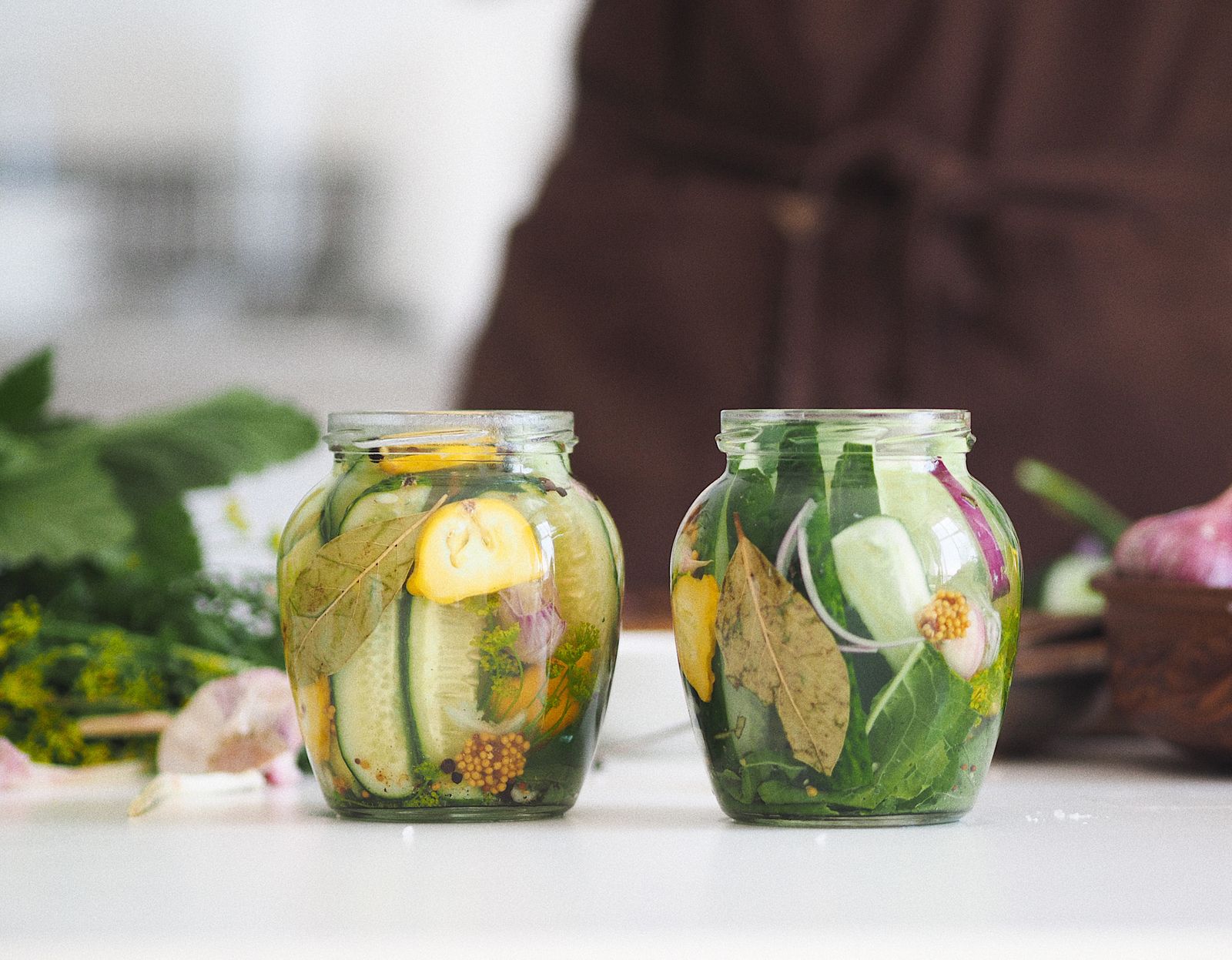
This makes enough for two pint jars, like the pair in the photo. It scales easily.
- 1 cup vinegar with 5 percent acidity. White wine, cider or plain distilled all work.
- 1 cup water.
- 1 tablespoon kosher salt, or 2 teaspoons fine sea salt.
- 1 to 2 tablespoons sugar, depending on how sweet you like them.
Bring everything to a simmer, stirring until the salt and sugar dissolve, then pour it hot over the packed jars. We keep the vinegar at no less than half of the liquid. Going weaker makes the pickles taste flat and shortens how long they stay good. If you prefer a sharper pickle, use a ratio of 3 parts vinegar to 2 parts water.
Keep it one to one, vinegar to water, and measure the salt. Everything else is up to you.
Choosing and preparing vegetables
Firm, fresh vegetables make the best pickles. A cucumber that is already bendy will not become crisp in brine. Pick small, thin-skinned pickling cucumbers when you can find them and use them within a day or two of buying.
- Cucumbers: slice into rounds or spears and trim a thin sliver from the blossom end, which holds enzymes that soften pickles.
- Summer squash and zucchini: slice a little thicker than cucumbers, since they soften faster.
- Green beans: trim and leave whole. Blanch for 30 seconds if you like them less squeaky.
- Red onions: slice thinly. They turn bright pink within an hour and are ready the same day.
- Carrots, radishes and fennel: cut into thin sticks or slices for a quick crunch.
Pack the vegetables tightly, leaving about half an inch of space at the top, so they stay submerged once the brine goes in.
Building flavor with aromatics
Aromatics go into the jar before the vegetables. Our starting set for each pint is one bay leaf, one teaspoon of yellow mustard seeds, two smashed garlic cloves, half a teaspoon of black peppercorns and a few fronds of dill. Beyond that, a few combinations we like: coriander seed and lemon peel with carrots; chili flakes and a sliver of ginger with cucumbers; fennel seed and orange zest with red onions.
Whole spices keep the brine clear. Ground spices make it cloudy and can taste muddy, so we avoid them. Fresh herbs are wonderful but will darken over a couple of weeks, which is harmless.
How long they take, and how long they keep
Thin onion and radish slices are good within a few hours. Cucumber spears and squash rounds taste best after 24 to 48 hours, once the brine has moved all the way through. Whole green beans need three or four days.
Kept in the refrigerator with vegetables fully submerged, our refrigerator pickles stay good for about a month. They will soften gradually over time. Always use a clean utensil to fish them out, and discard any jar that smells off, looks slimy or shows mold. When a jar is finished, the leftover brine makes an excellent base for a salad dressing, or a splash to brighten potato salad, before you start the next batch.