Rolling Fresh Egg Pasta by Hand, With Only a Pin and a Board
You do not need a pasta machine to make silky egg noodles. Our dough ratio, the resting step people skip, and the long rolling pin technique that gets a sheet thin enough to read through.

Kenji Arakawa, Head of Photography
· 4 min read
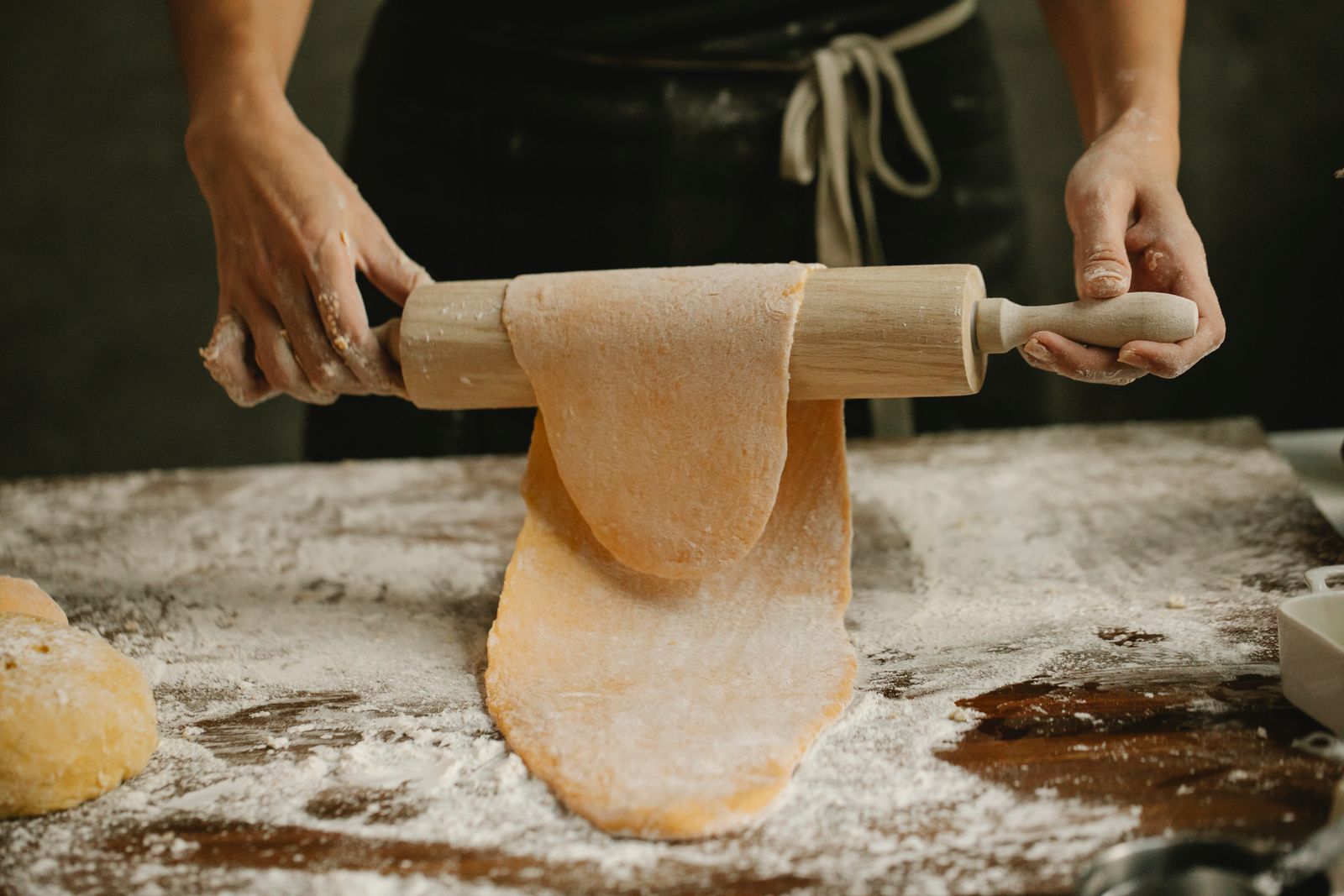
When we photographed this story, the shot we kept coming back to was the moment the sheet of dough lifts over the pin. It shows the whole point of rolling by hand: the dough is thin enough to drape, strong enough not to tear, and a deep yellow from egg yolks. We made pasta this way for a week in the test kitchen before shooting, and by the end everyone on the team could roll a sheet without a machine. Here is how.
The dough ratio we use
For four generous servings we use 300 grams of flour and 3 whole eggs plus 2 extra yolks, which weigh roughly 200 grams together. The extra yolks give richness and color and make the dough more pliable under a rolling pin. Finely milled soft wheat flour gives the silkiest result. All-purpose flour works well too, and a mix of half all-purpose and half semolina adds a little bite.
- Pile the flour on a wooden board and make a wide well in the center.
- Add the eggs and yolks, beat them with a fork, then slowly pull in flour from the inner wall.
- When it becomes a shaggy mass, use a bench scraper to bring everything together.
- Knead for 8 to 10 minutes, until the dough is smooth, firm and springs back slowly when pressed.
- If it feels dry and cracks, wet your hands and keep kneading. If it sticks, dust with a spoonful of flour.
The rest is not optional
Wrap the kneaded dough tightly and leave it at room temperature for at least 30 minutes, and up to two hours. During this time the flour fully hydrates and the gluten relaxes. Skip it and the dough will spring back every time you roll, fighting you across the whole board. This is the single step that separates a frustrating afternoon from an easy one.
Unrested dough shrinks back like a rubber band. Rested dough stays where you put it.
Rolling technique with a long pin
The ideal tool is a long, thin, straight wooden pin, at least 24 inches, without handles. A shorter handled pin works for smaller portions. Divide the dough in half and keep the piece you are not using covered, since exposed dough dries in minutes.
Flatten the dough into a disk with your palm and start rolling from the center outward, turning the disk a quarter turn after each few strokes to keep it round. Once it is about a quarter inch thick, change to the stretching motion used by experienced pasta makers. Roll the far edge of the sheet around the pin, then push the pin away from you while your palms slide outward from the middle to the ends. This stretches the dough rather than just pressing it. Unroll, rotate the sheet, and repeat.
- Dust the board lightly and often. Too much flour dries the sheet and makes it crack.
- Work quickly and steadily. A sheet that sits uncovered for five minutes starts to stiffen.
- Roll until you can just see the grain of the wood or your fingers through the dough, about 1 millimeter thick.
- Keep the edges as thin as the center, since they tend to stay thick.
Cutting and cooking
Let the finished sheet dry on the board for 5 to 10 minutes, until it feels leathery but not brittle. This helps the noodles hold their shape. Dust with semolina, roll the sheet loosely into a flat log and slice across with a sharp knife: a quarter inch for fettuccine-width ribbons, three quarters of an inch for pappardelle. Shake the cut pieces open and toss them with more semolina, then form them into loose nests.
Fresh pasta cooks fast, usually in 90 seconds to 3 minutes. Salt the water well, add the noodles, and start tasting after one minute. Lift them straight into the sauce with tongs, adding a splash of the starchy cooking water to help it cling. Delicate fresh egg pasta pairs best with butter-based and light sauces: brown butter and sage, lemon and parmesan, or a short simmered tomato sauce.
Making ahead
Uncooked nests keep in the refrigerator, loosely covered, for up to a day. For longer storage, freeze the nests on a tray until firm, then transfer to a bag and cook them straight from frozen, adding about a minute to the time. Leftover scraps from trimming the sheet are worth saving too. Cut them into irregular pieces and cook them in soup the next day.
From a photographer's point of view, hand-rolled pasta is also a pleasure to shoot because every sheet looks slightly different. From a cook's point of view, the pleasure is in how little you need: flour, eggs, a board, a pin and about an hour.