Pour-Over Coffee at Home: Grind, Ratio and the Four Minutes That Matter
A cone dripper, a scale and a kettle are all you need for a bright, clean cup. We break down the ratio we start with, how to adjust grind by taste, and the pouring pattern that keeps extraction even.

Naomi Castell, Membership & Community Lead
· 4 min read
The morning coffee in our office is made by whoever arrives first, and for a long time that meant the quality varied wildly. So we wrote a simple method and taped it next to the kettle. Within a week the cups were consistent, and several members of our cooking club asked for the card. This is that card, expanded with the reasoning behind each step.
The gear, and what actually matters
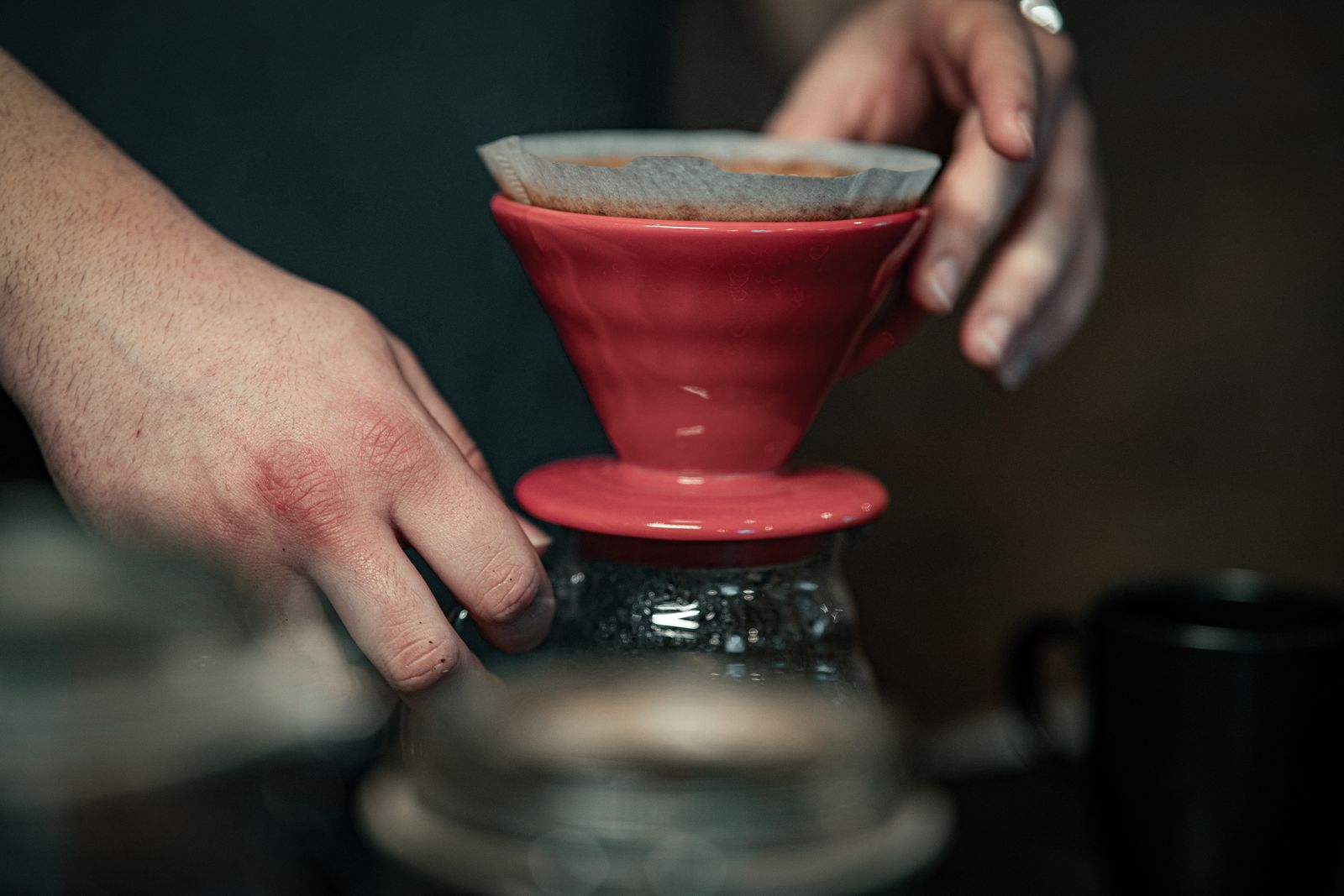
A pour-over setup is small and forgiving. The dripper can be ceramic, glass, plastic or metal. Ceramic, like the red cone in the photo, holds heat well once preheated, while plastic is lighter and loses less heat to begin with. Both make excellent coffee. The pieces that really change your cup are further down the list.
- A burr grinder. Blade grinders produce a mix of dust and chunks that extract unevenly, and no pouring technique can fix that.
- A digital scale that reads to one gram. Scoops vary by as much as 30 percent depending on roast and grind.
- A kettle with a narrow spout, so you can control where and how fast water lands.
- Paper filters sized for your dripper, rinsed with hot water before use to remove papery flavor and warm the cone.
Start with a ratio, then trust your tongue
We start at 1 to 16: 20 grams of coffee to 320 grams of water, which makes one generous mug. Water should be just off the boil, around 200 F, which in practice means waiting about 30 seconds after the kettle clicks off. Grind to roughly the texture of coarse sand. From there, taste decides everything.
If the coffee tastes sour, thin or sharp, it is under-extracted. Grind a little finer so water spends more time in contact with the grounds. If it tastes bitter, harsh or drying, it is over-extracted, so grind coarser. Change only one thing at a time, and only one step on the grinder, so you can tell what made the difference.
Sour means go finer, bitter means go coarser. That one sentence fixes most cups we taste.
The pour, in four stages
Place the dripper on the carafe, set both on the scale, add the ground coffee and tare to zero. Start a timer as you begin pouring.
- Bloom: pour 50 grams of water, enough to wet all the grounds, and wait 30 to 45 seconds. Fresh coffee will puff up and bubble as carbon dioxide escapes.
- First pour: slowly add water in small circles from the center outward, stopping short of the paper, until the scale reads 180 grams.
- Second pour: when the level drops by about a third, continue in the same pattern up to 320 grams.
- Drawdown: give the dripper a gentle swirl to flatten the bed, then let it drain. Total time should land between 3 and 4 minutes.
If the brew finishes well under three minutes, your grind is probably too coarse. If it stalls past four and a half, go coarser, or check whether very fine particles are clogging the filter. A flat bed of grounds at the end with no deep crater means the water flowed evenly.
Beans, storage and small habits
No method rescues stale beans. Buy whole beans in quantities you will finish within three to four weeks of the roast date, and grind right before brewing. Keep them in an opaque, airtight container at room temperature. We do not recommend the freezer for a bag you are opening daily, because condensation forms every time it comes out.
Water is the other half of the cup. If your tap water has a strong mineral or chlorine taste, a simple pitcher filter improves coffee noticeably. Very soft or distilled water, on the other hand, tends to make flat, lifeless coffee because minerals help pull flavor from the grounds.
Finally, rinse the dripper and carafe right after brewing and wash them properly once a day. Coffee oils go rancid on surfaces and add a stale edge to tomorrow's cup that no adjustment to grind or ratio will explain. Get these habits right, and whoever arrives first will make a cup everyone else is glad to drink.