Buying and Storing Olive Oil So It Still Tastes Like Olives
How we read olive oil labels, why we keep two bottles going at once, where the bottle should live, and a two-minute tasting routine that tells you whether your oil is still worth pouring raw.

Marcus Bellamy, Store & Sourcing Lead
· 5 min read
In our test kitchen we go through olive oil faster than any other ingredient except salt. It goes into dressings, under roasting vegetables, over finished soups and into cake batter. Because we use so much of it, we have also made most of the mistakes: buying a size we could not finish, storing it next to the stove, and saving the good bottle for so long that it went flat before we opened it. This is what we learned, written so you can skip those mistakes.
Read the back of the bottle, not the front
The front label on most oil is decoration. The useful information is usually on the back or printed on the neck. When we evaluate a new oil for the shop, we look for four things before we ever taste it.
- A harvest date, not just a best-by date. Oil is at its best for roughly 12 to 18 months after harvest, and a best-by date can be set two years out from bottling.
- Dark glass or a tin. Light flattens flavor quickly, and a clear bottle on a bright shelf is working against you.
- A named region or estate. Blends are not automatically bad, but a specific origin means someone is accountable for what is inside.
- A size you can realistically finish within about two months of opening.
We ignore words like pure, light and premium. Light refers to color and flavor, not calories, and pure usually means a refined oil with a little virgin oil added back for aroma. Neither is harmful, but neither is what you are paying extra virgin prices for.
Two bottles are better than one
We keep two oils open at all times and recommend the same at home. The first is an everyday extra virgin oil bought in a larger tin and decanted into a small bottle with a pour spout. This is the oil for softening onions, roasting potatoes and greasing pans. It should taste clean and pleasant, but it does not need to be exciting.
The second is a finishing oil, bought in a smaller bottle and used raw. This is where you pay for character: grassy, peppery, sometimes bitter enough to catch in the back of your throat. That peppery tickle is a good sign. It comes from polyphenols, which are strongest in fresh oil pressed from early harvest fruit. We pour it over white beans, grilled bread, ripe tomatoes and thick yogurt with a pinch of flaky salt.
Splitting oil this way means you are never tempted to fry with the expensive bottle, and you are never stuck dressing a salad with something tired.
Where the bottle lives matters
Heat, light and air are the three enemies of olive oil. The shelf right beside the stove is convenient, and it is also the worst spot in most kitchens. In our test kitchen the working bottle sits on a shelf across the room, and the backup tin lives in a closed cabinet away from the oven wall.
- Keep the cap on between uses. A pour spout left uncovered all week lets oxygen do its slow work.
- Decant from a tin into a small bottle instead of opening the whole tin every day.
- Do not refrigerate everyday oil. It clouds and thickens, and repeated temperature swings cause condensation inside the bottle.
- Write the date you opened it on a strip of masking tape across the shoulder of the bottle.
How to taste what you bought
Tasting oil takes two minutes and will teach you more than any label. Pour a tablespoon into a small glass, cup it in your hand to warm it slightly, then cover the top and swirl. Uncover, smell, and sip a little while drawing air in through your teeth. You are looking for fruit first, something green like cut grass, tomato leaf or artichoke. Then bitterness on the tongue, then pepper in the throat.
Oil that smells like crayons, putty or stale nuts has gone rancid. Oil that tastes of wine or vinegar, or feels muddy, came from poorly handled fruit. Neither will hurt you, but neither will improve your food, so use it up for greasing pans and replace it.
If an oil tastes like nothing on a spoon, it will taste like nothing on your salad. Buy the one that makes you pay attention.
The olives themselves
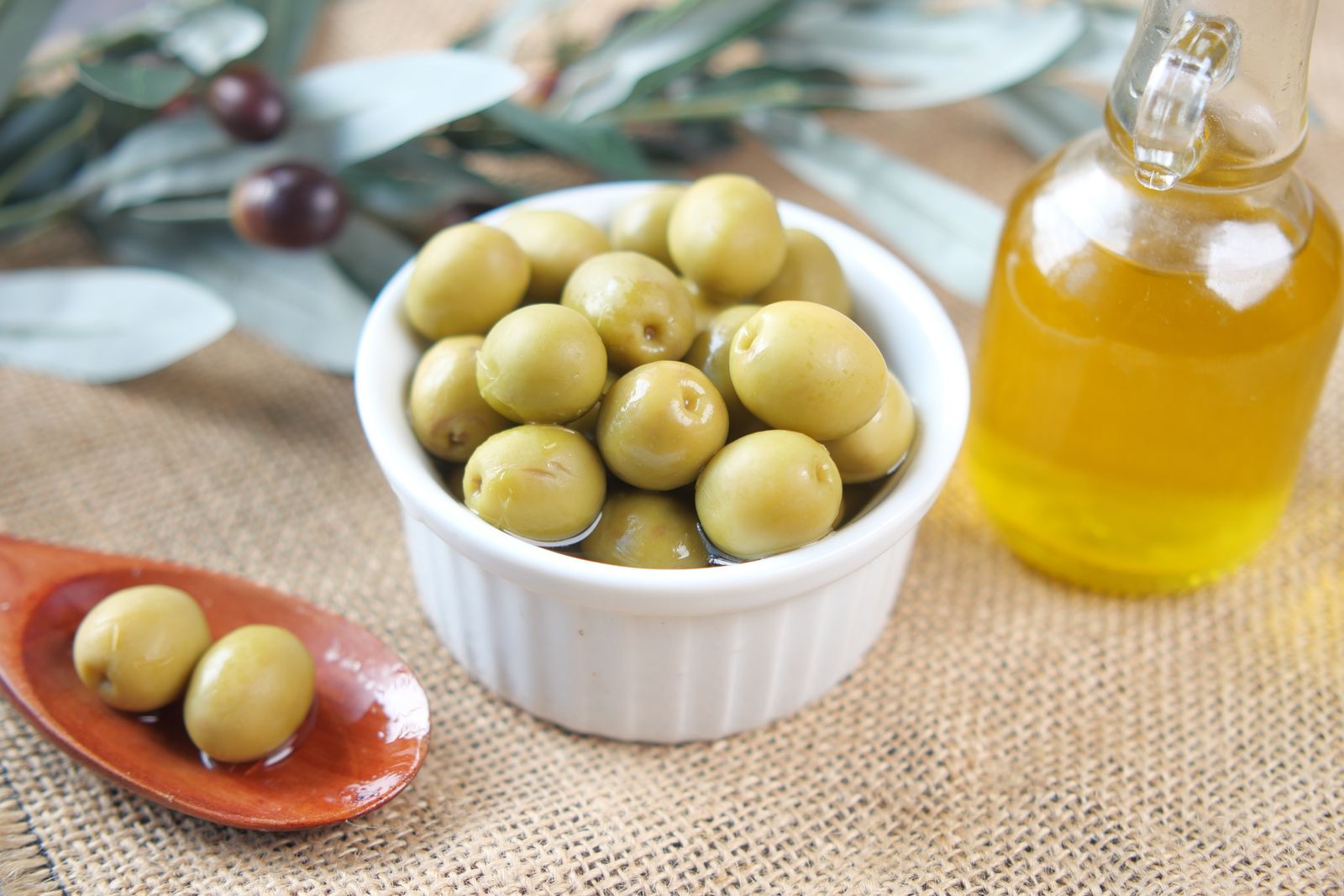
The bowl of green olives beside the oil earns its place in the pantry for the same reasons: olives keep well, they improve simple food, and a good jar rescues a weeknight. We keep a jar of mild, buttery green olives and a jar of wrinkled oil cured black ones. Once opened, keep them submerged in their brine in the refrigerator and use a clean spoon rather than fingers so the brine stays clear.
A quick way to make any jarred olive taste homemade: drain a cup of them, toss with two tablespoons of your finishing oil, a strip of lemon zest, a smashed garlic clove, half a teaspoon of fennel seeds and a pinch of chili flakes, then leave them at room temperature for an hour. Put out a bowl of them with bread and you have the start of dinner before the pasta water boils.